RAMEENA JALIL

Product Designer

WORK

ABOUT ME

PLAYGROUND

HELLO.UXBYRAY@GMAIL.COM

Enter password to view case study

AutoYard: Fleet & Yard Operations Platform

OVERVIEW

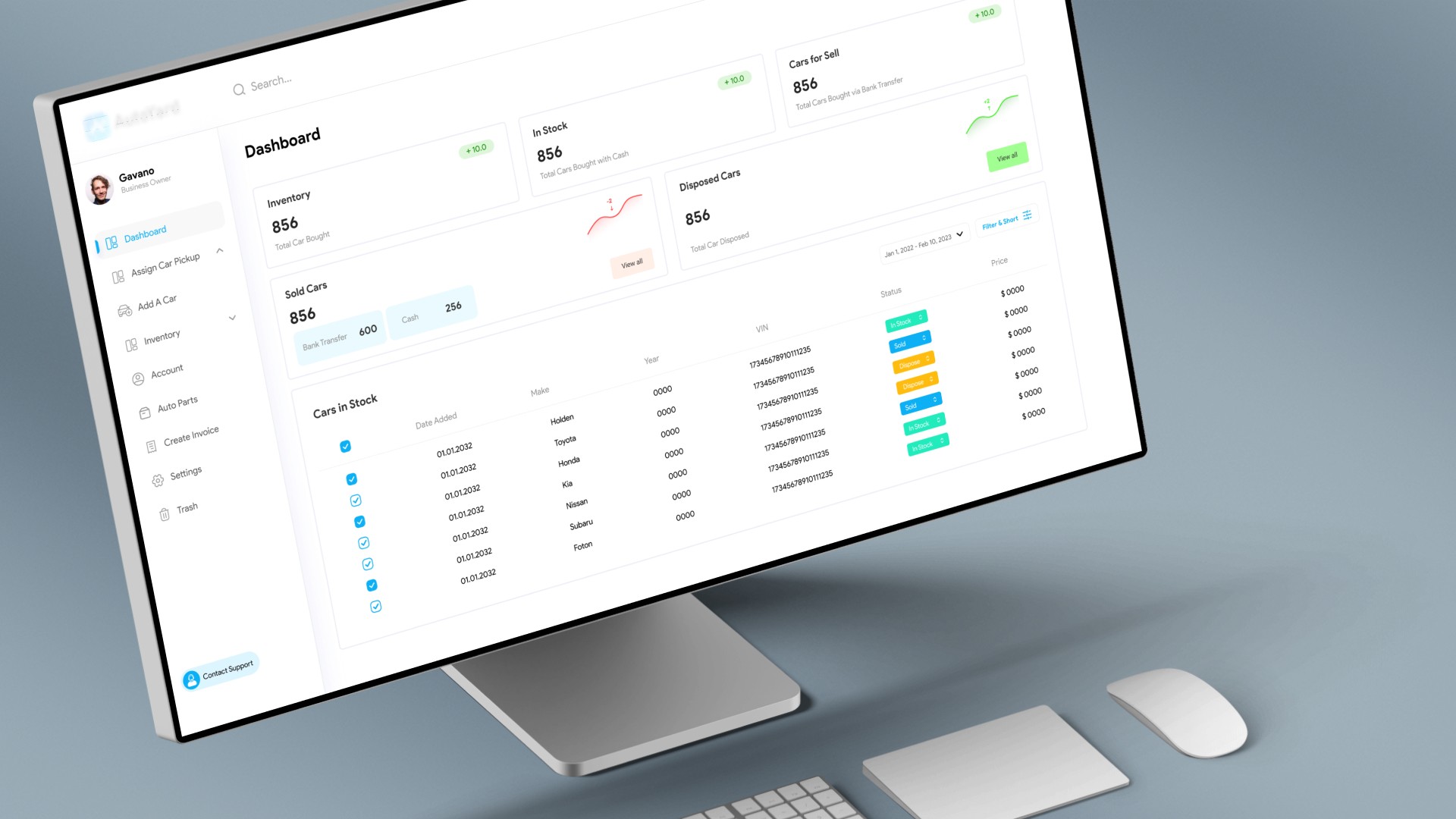
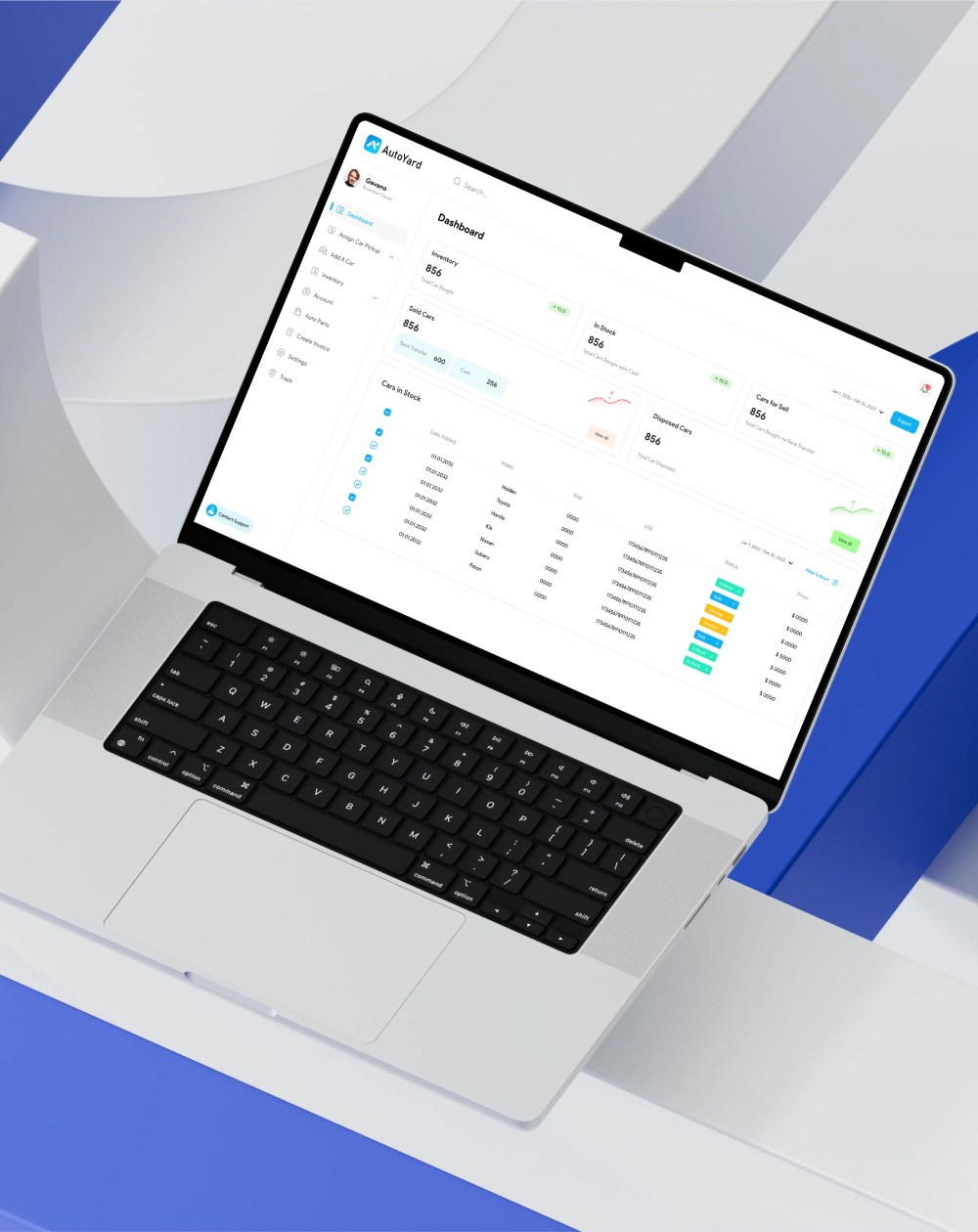
AutoYard is a fleet and yard operations platform designed to centralize vehicle tracking, scheduling, and logistics coordination. I led UX strategy and interface design to create clear operational workflows and dashboards that support multiple user roles in a high-activity environment.
YEAR

2025

SERVICES

End-to-end ownership across:

  • Dispatcher/Admin web dashboard

  • Driver mobile application

  • Supporting landing pages

  • Store graphics

ROLE

Led UX strategy and interface design for key AutoYard modules, including fleet tracking, scheduling dashboards, and operations workflows, ensuring clarity and consistency across complex user tasks.

Overview

This case study covers the design of a 0→1 B2B operations platform built for towing companies to manage dispatching, driver coordination, and job tracking.


Before this product existed, towing companies relied on paper registers, phone calls, and manual follow-ups to assign jobs and track drivers. The lack of real-time visibility led to missed pickups, delayed responses, and operational stress for dispatchers.


The goal of Autoyard was to replace those fragmented workflows with a single, reliable system that towing companies could trust for daily operations.

Solution

AutoYard’s design features centralized dashboards, real-time schedule views, and intuitive workflows that guide users through complex operational tasks. Interfaces reduce cognitive load with clear patterns, consistent layout, and predictable feedback, supporting scalable operations.

Outcome

The standardized interface patterns and workflow logic improved clarity and usability across roles, enabling teams to navigate operational complexity with greater consistency and confidence.

Business Context

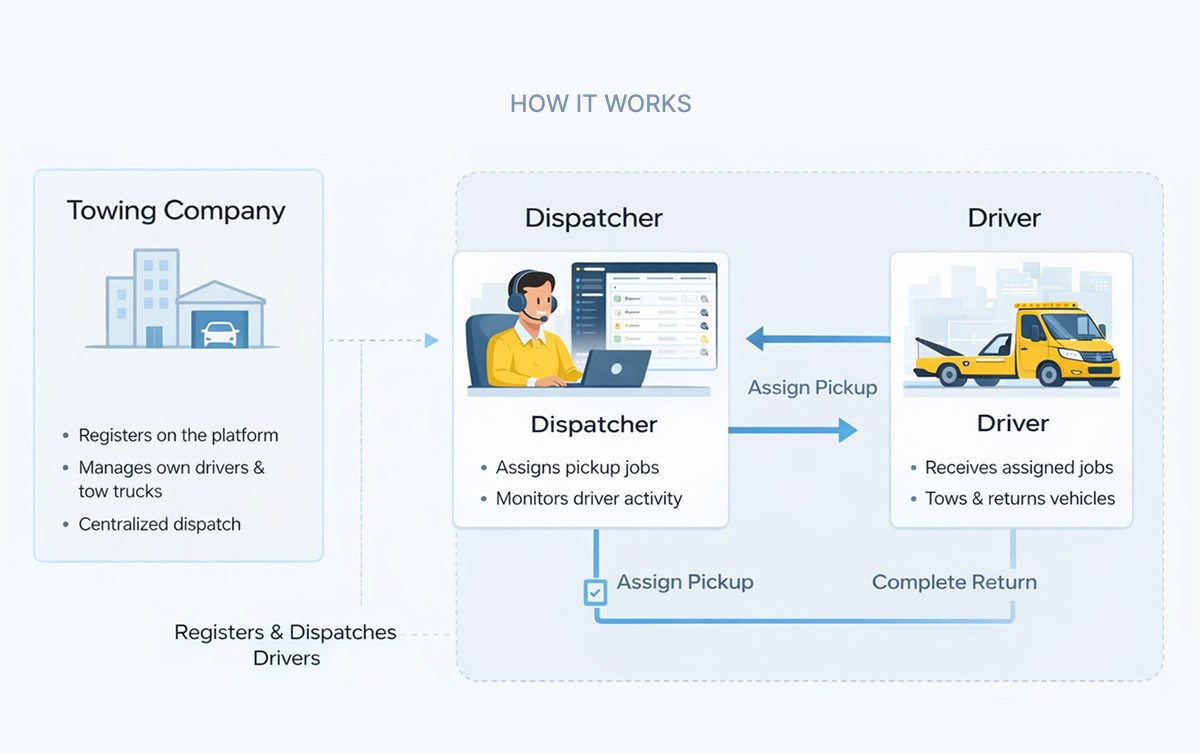
The platform serves towing companies, not individual drivers or car owners.


  • Companies register on the platform

  • Each company manages its own drivers and towing vehicles

  • Dispatchers assign jobs internally

  • Drivers execute pickups and return vehicles to the company yard


The product needed to work across multiple companies, each with different team sizes, workflows, and operational pressure.

The Core Problem

The platform serves towing companies, not individual drivers or car owners.


  • Companies register on the platform

  • Each company manages its own drivers and towing vehicles

  • Dispatchers assign jobs internally

  • Drivers execute pickups and return vehicles to the company yard


The product needed to work across multiple companies, each with different team sizes, workflows, and operational pressure.

Primary Dispatcher Pain

The biggest operational issue before the product was launched was simple but critical:

Dispatchers could not reliably track which driver was where once a job was assigned.

This resulted in:

  • Constant phone calls to drivers for updates

  • Uncertainty about job progress

  • Delayed or missed pickups

  • High stress during time-sensitive operations

Secondary Issues

  • Job states were unclear after assignment

  • Records were maintained manually on paper

  • There was no single source of truth for job history


However, these were symptoms.

The root problem was lack of real-time visibility and control.

Why This Problem Mattered

Towing jobs are time-sensitive and often urgent.


If a driver failed to reach a pickup location on time:

• The car owner became frustrated

• The towing company lost money

• Trust in the company was damaged


Even small coordination failures had direct financial and reputational impact.

This made reliability more important than feature richness.

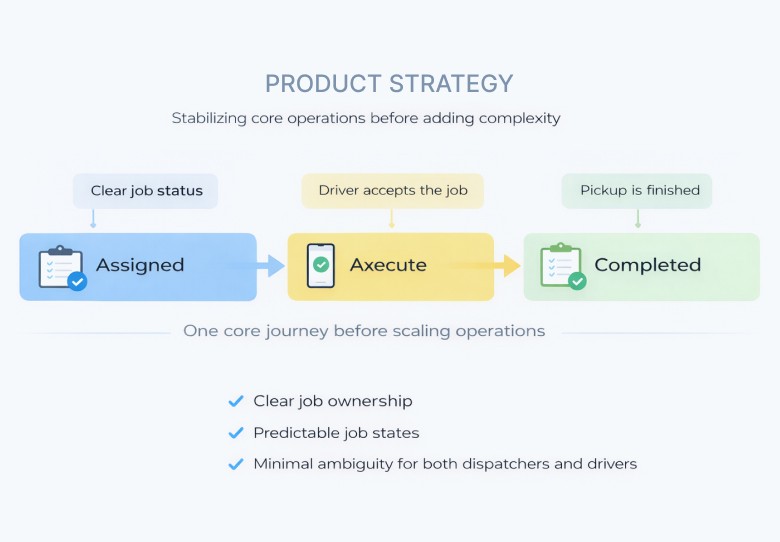
Product Strategy

The strategy was to stabilize the core operation first, before adding complexity.


Instead of trying to optimize everything at once, the focus was on:


  • Clear job ownership

  • Predictable job states

  • Minimal ambiguity for both dispatchers and drivers


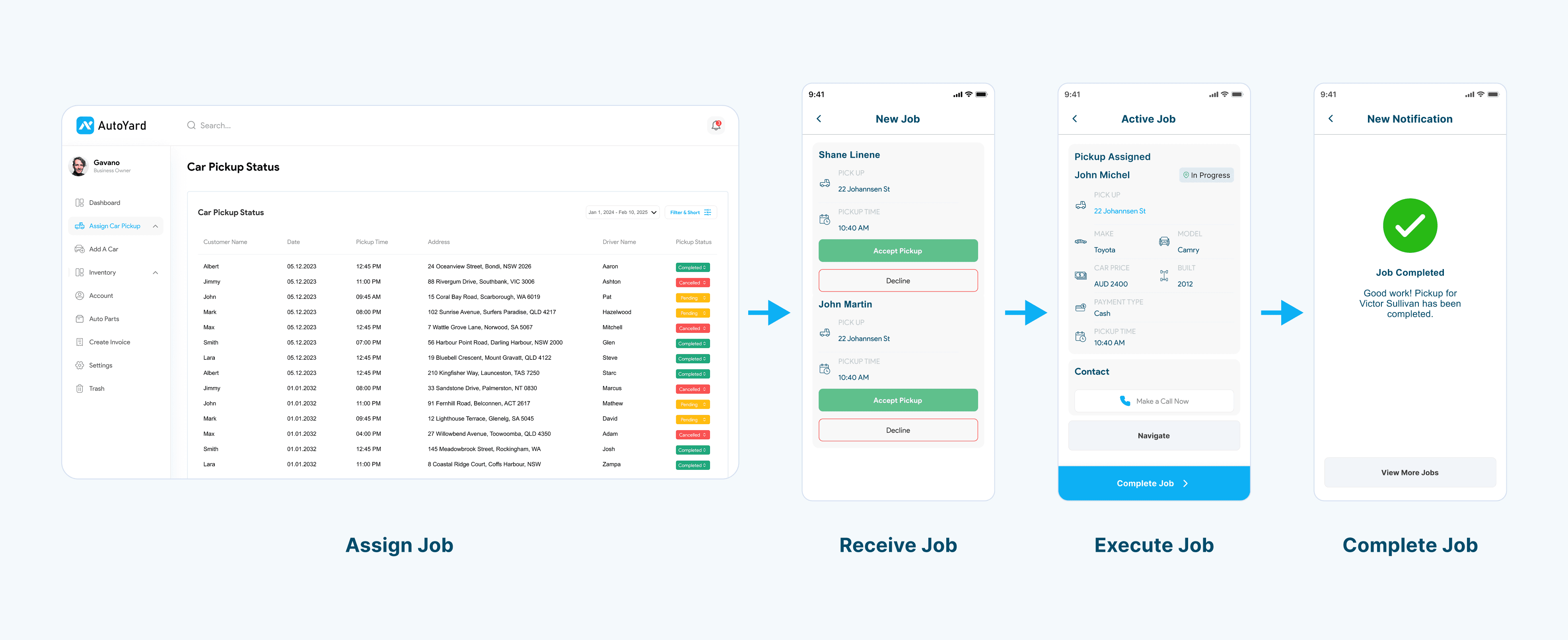
The product was designed around one core journey:


Assign → Execute → Complete


Everything else supports this flow.

Key Design Decisions & Trade-offs

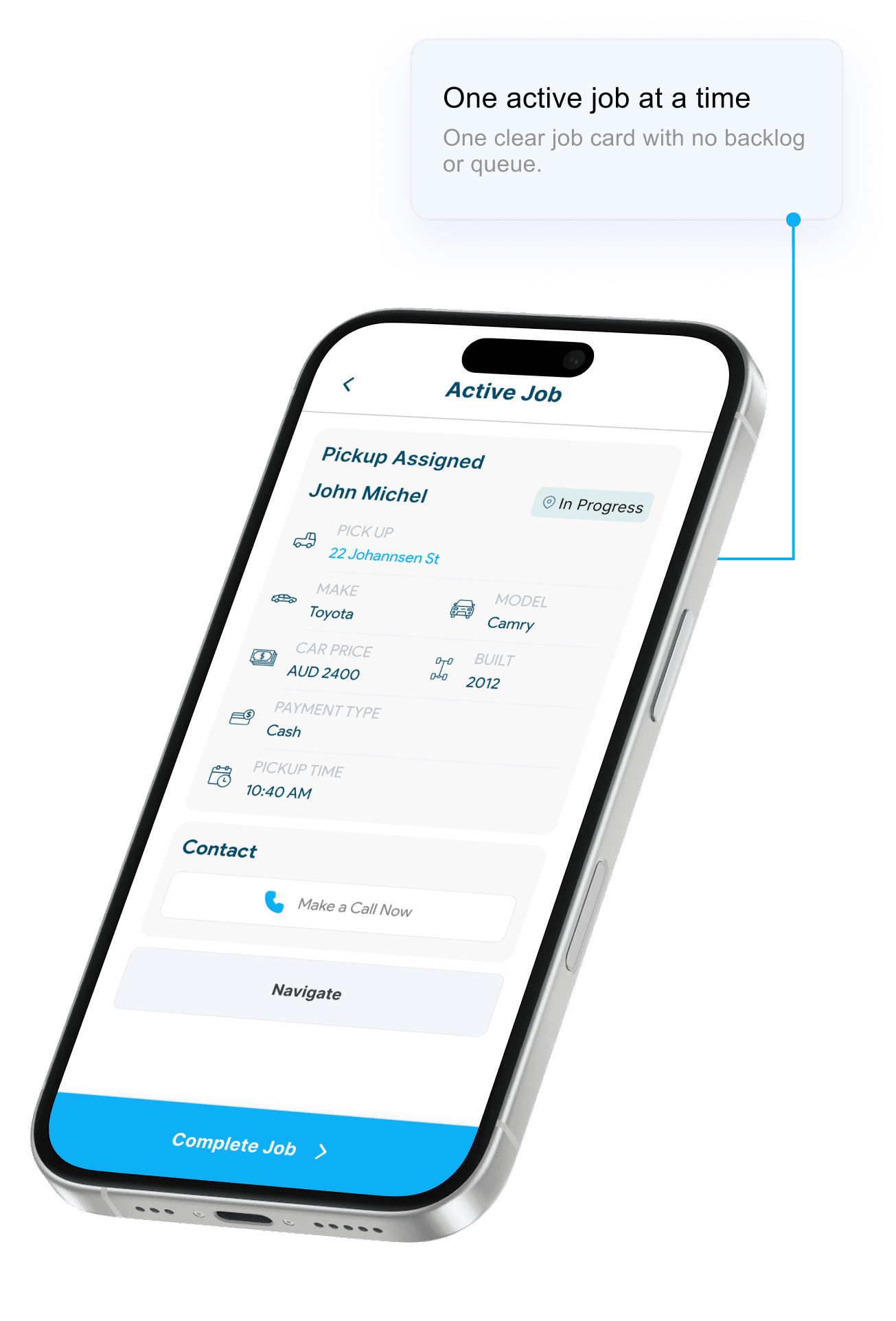
1. One Active Job per Driver

Decision

Drivers can only have one active job at a time.


Reasoning

Allowing multiple active jobs would increase flexibility, but it would also introduce:

  • State conflicts between dispatcher and driver

  • Missed pickups

  • Unclear responsibility during execution


For an MVP replacing manual workflows, clarity and reliability mattered more than optimization.

This constraint simplified:

  • Dispatcher confidence

  • Driver responsibility

  • System logic

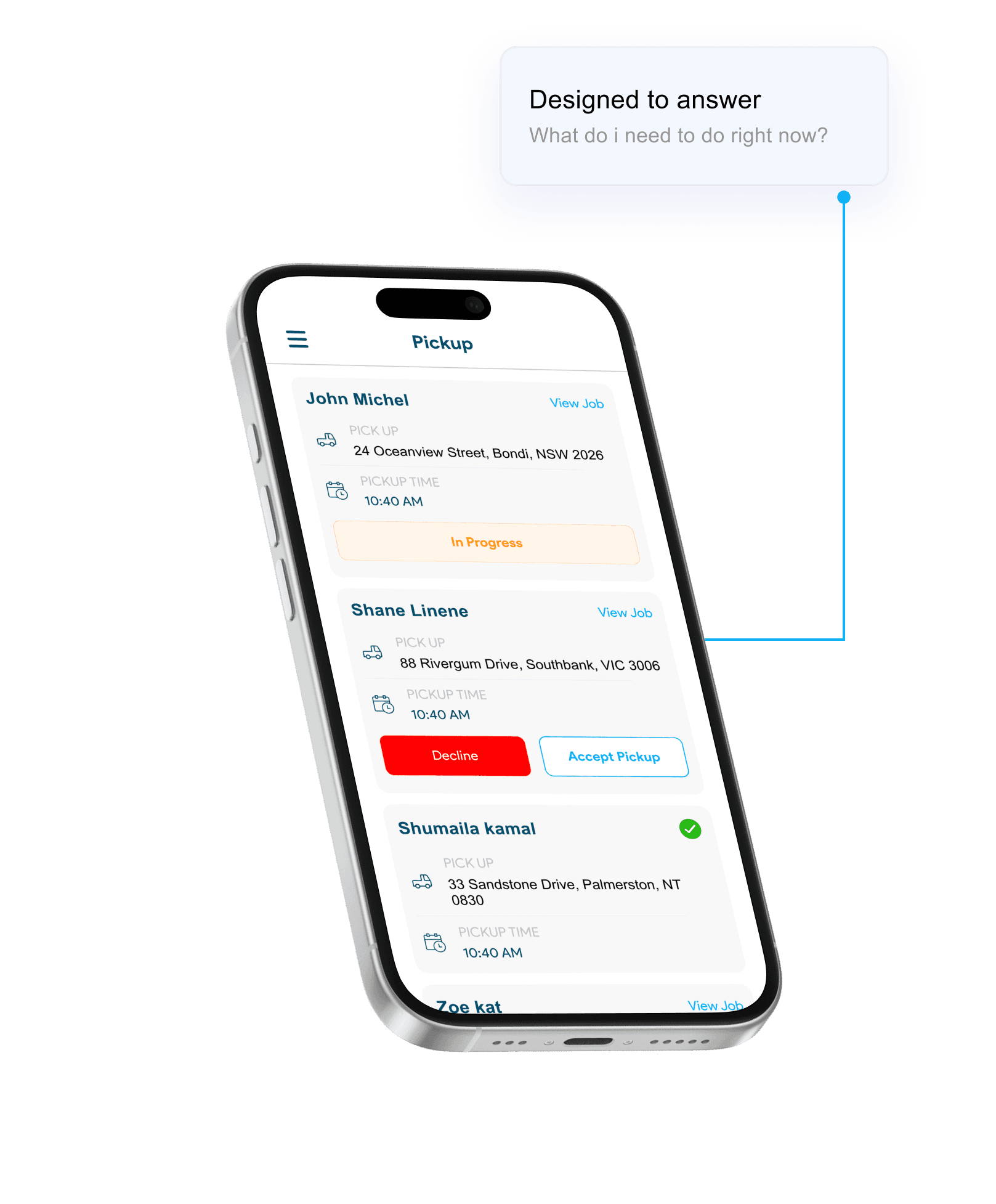
2. Minimal Driver App Navigation

Decision

The mobile app was intentionally limited to essential actions only.


Reasoning

Drivers are executors, not decision-makers.

The app is used during active work, often under time pressure.


Reducing navigation and options ensured:

  • Faster comprehension

  • Fewer errors

  • Predictable behavior during execution


The app was designed to answer one question clearly at all times:


“What do I need to do right now?”

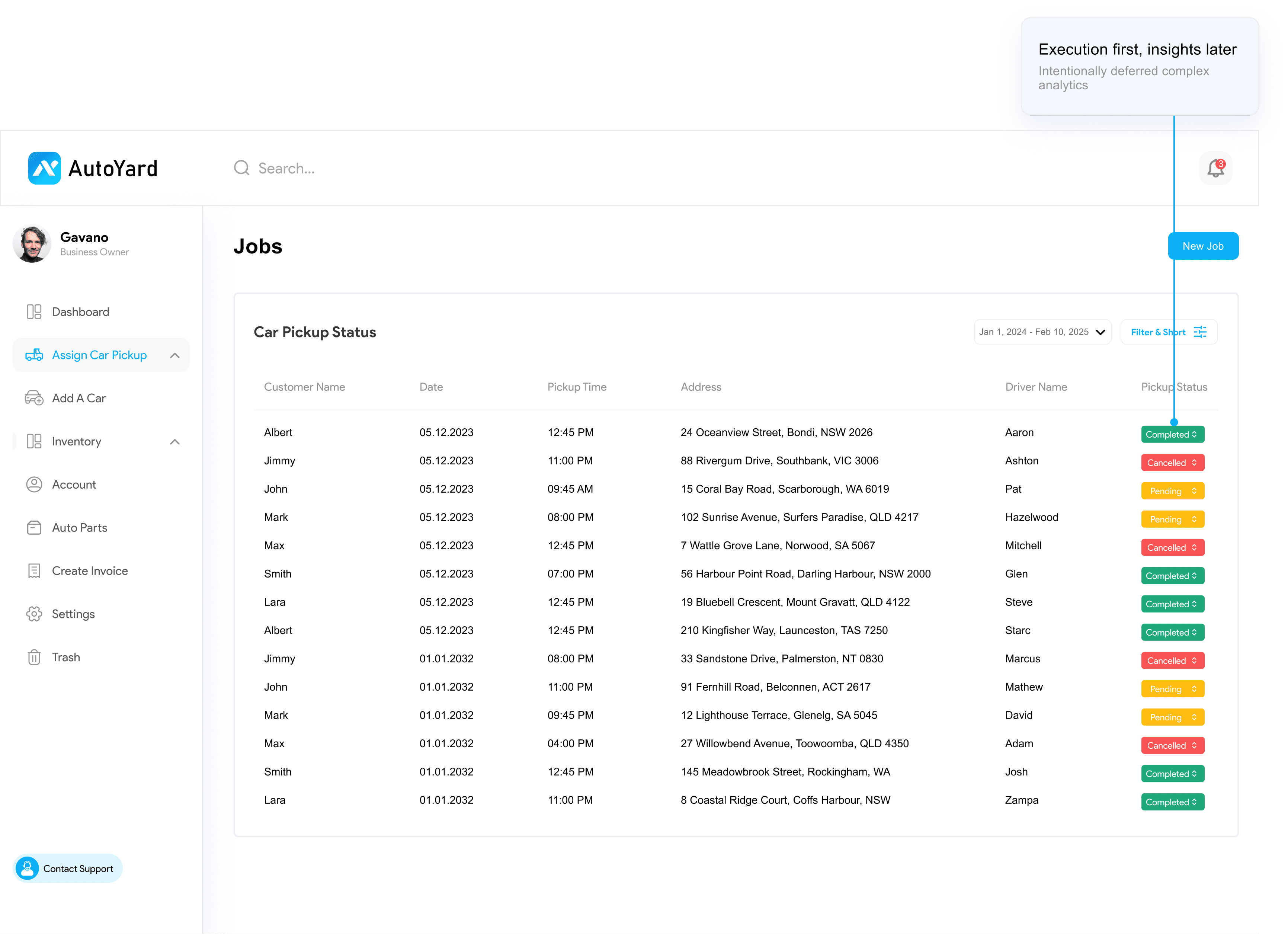
3. Deferring Advanced Analytics

Decision

Advanced analytics and automation rules were intentionally excluded from the first version.


Reasoning

The immediate business need was to replace paper-based workflows with a dependable system.


Analytics would only be meaningful once:

  • Job data was consistent

  • The core lifecycle was stable

  • Teams trusted the system

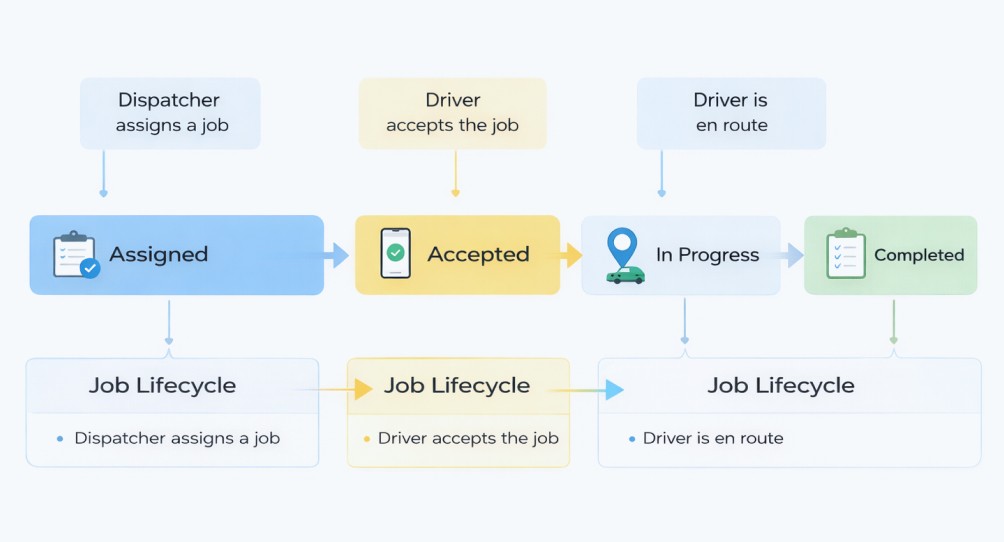
The Core User Flow

Design System & Scalability

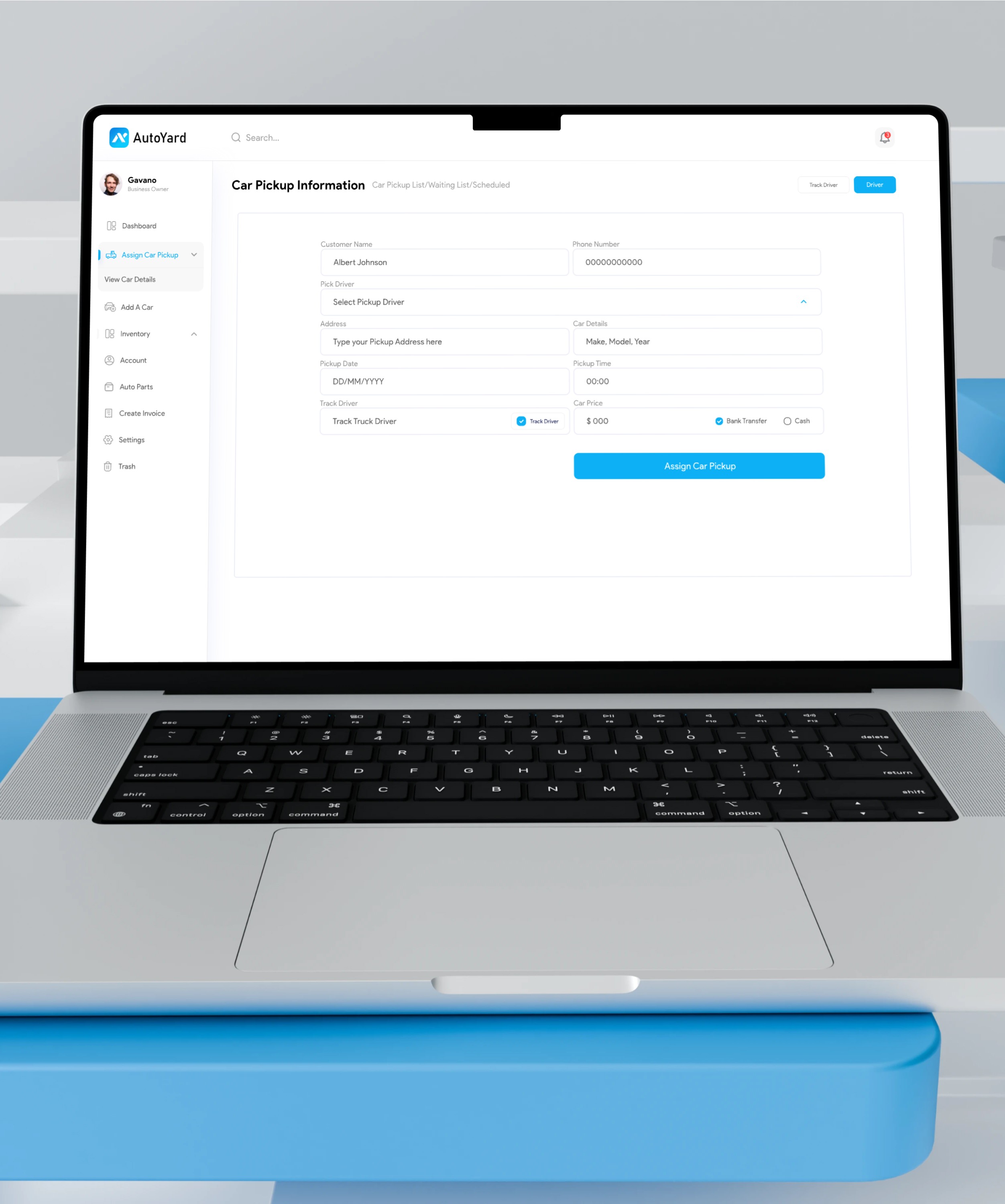
Dispatcher / Admin Dashboard
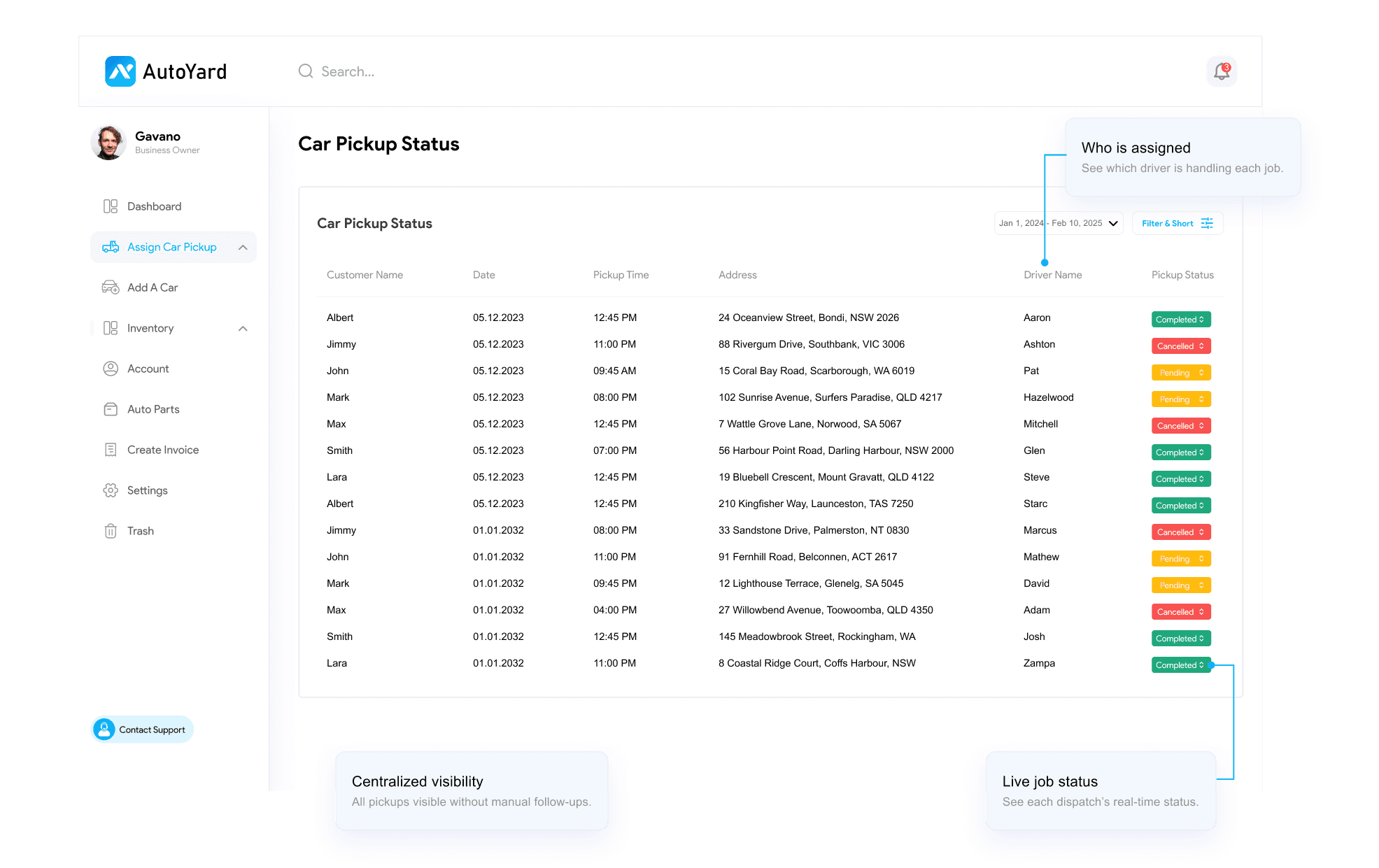
  • Centralized job management

  • Clear job states and statuses

  • Real-time visibility into driver activity

  • Structured records instead of paper logs

  • Exportable reports to support operations


The dashboard replaced memory-based decision-making with visible system state.

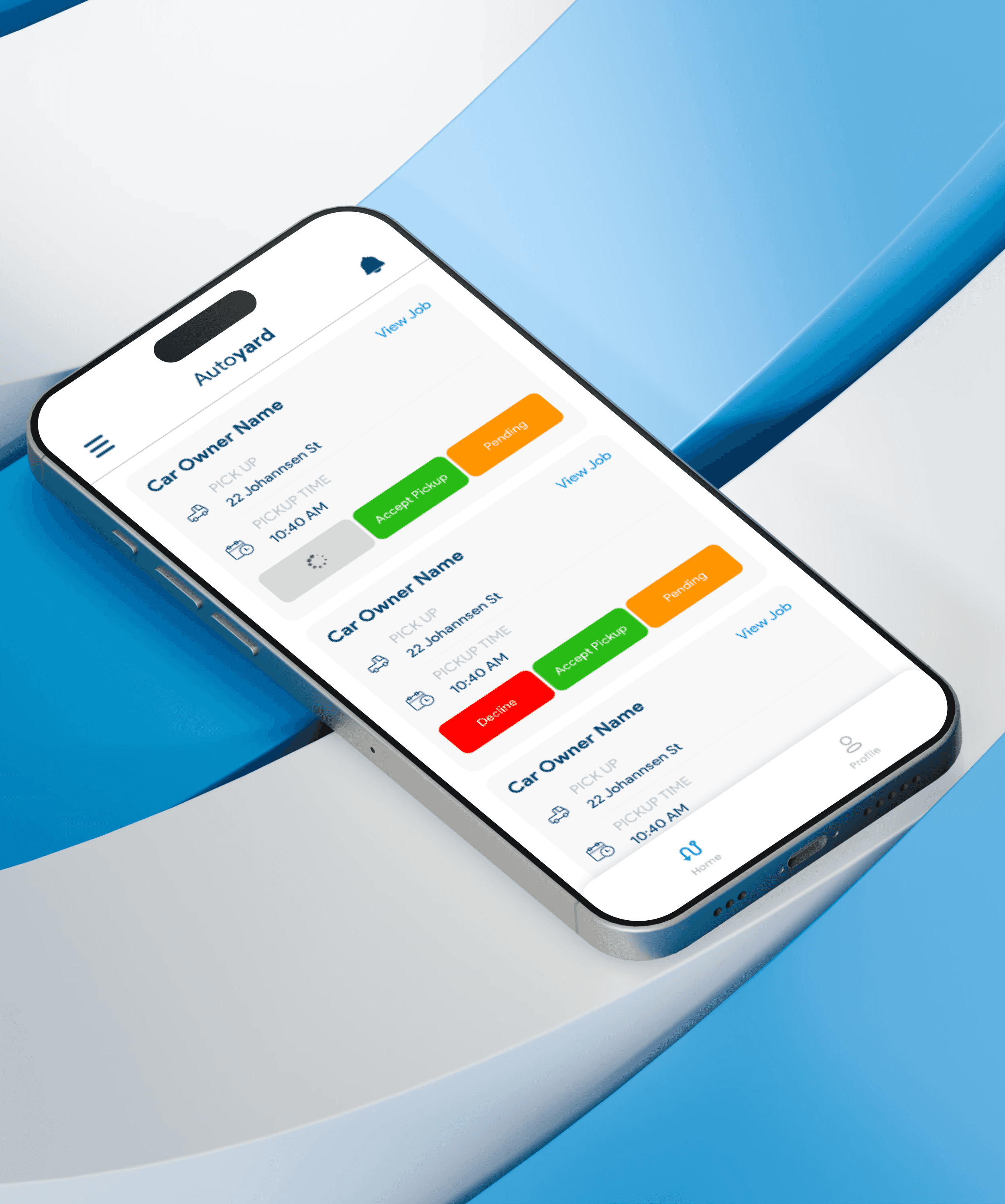
Driver Mobile Application
  • Mobile-first

  • One active job at a time

  • Clear accept → execute → complete flow

  • Minimal UI distractions

  • Designed for predictability over flexibility


The goal was not to impress drivers, but to support execution without confusion.

Validation & Impact

After launch:


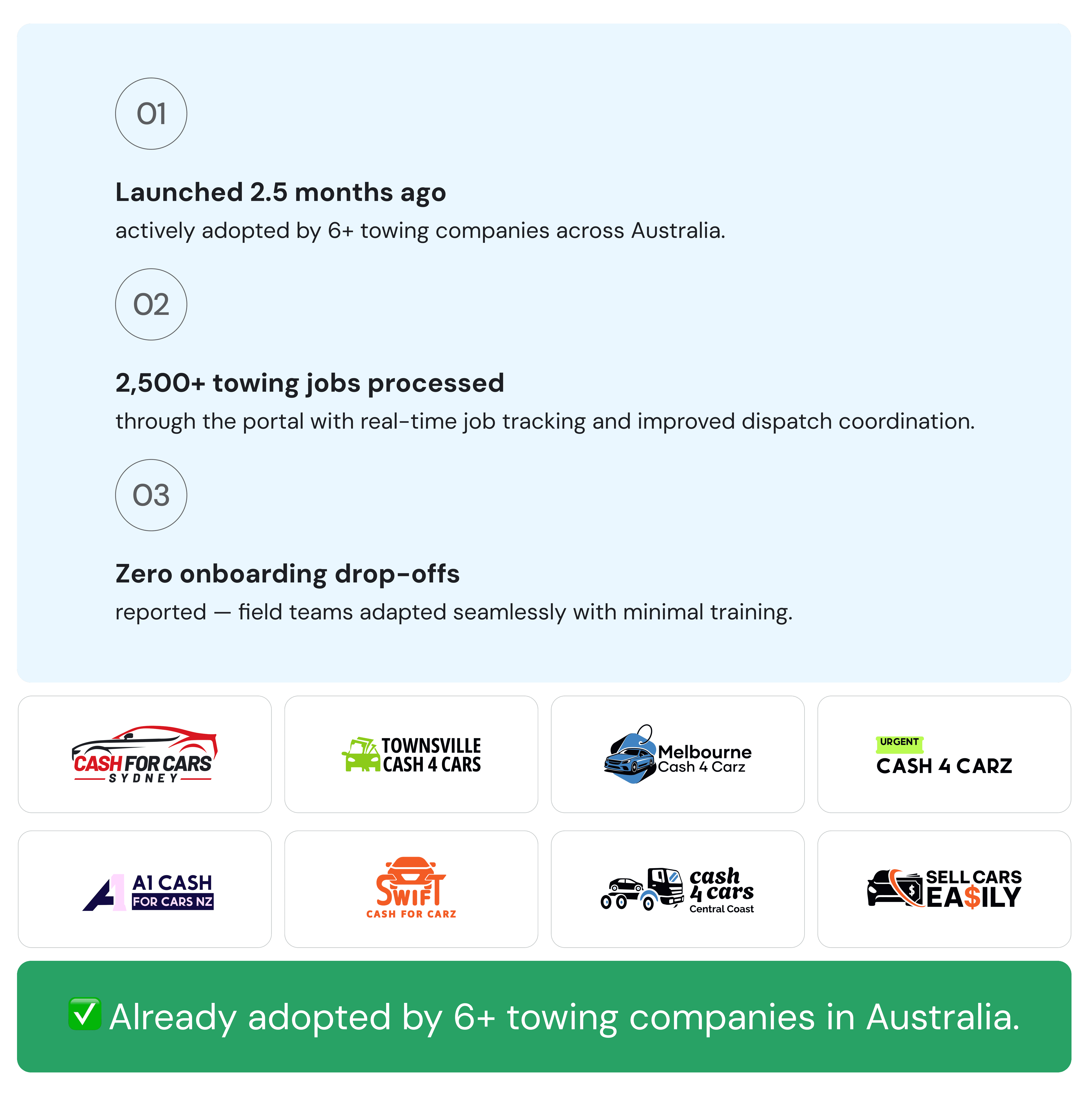
  • Adopted by 6+ towing companies across Australia

  • 2,500+ towing jobs processed

  • Faster job handling reported by dispatchers

  • Reduced need for manual follow-ups

  • No reported onboarding drop-offs


The strongest validation came from how quickly teams adopted the system and relied on it for daily operations.

Validation & Outcomes

Learnings & Reflection

This project reinforced the importance of:

  • Designing for reliability before optimization

  • Making deliberate constraints early

  • Prioritizing operational clarity over feature density


If scaling further, the next focus areas would be:

  • Analytics once data quality is stable

  • Exception handling for missed or delayed pickups

  • Carefully introducing automation without reducing trust

This project was successful because it transformed fragmented, manual towing operations into a clear and reliable job lifecycle that companies could trust for daily use.

hello.uxbyray@gmail.com

Some projects are password-protected. If you’d like access or a walkthrough, feel free to contact me via email.

© 2026 Rameena Jalil

RAMEENA JALIL

Product Designer

WORK

ABOUT ME

PLAYGROUND

HELLO.UXBYRAY@GMAIL.COM

Enter password to view case study

AutoYard: Fleet & Yard Operations Platform

OVERVIEW

AutoYard is a fleet and yard operations platform designed to centralize vehicle tracking, scheduling, and logistics coordination. I led UX strategy and interface design to create clear operational workflows and dashboards that support multiple user roles in a high-activity environment.
YEAR

2025

SERVICES

End-to-end ownership across:

  • Dispatcher/Admin web dashboard

  • Driver mobile application

  • Supporting landing pages

  • Store graphics

ROLE

Led UX strategy and interface design for key AutoYard modules, including fleet tracking, scheduling dashboards, and operations workflows, ensuring clarity and consistency across complex user tasks.

Overview

This case study covers the design of a 0→1 B2B operations platform built for towing companies to manage dispatching, driver coordination, and job tracking.

Before this product existed, towing companies relied on paper registers, phone calls, and manual follow-ups to assign jobs and track drivers. The lack of real-time visibility led to missed pickups, delayed responses, and operational stress for dispatchers.

The goal of Autoyard was to replace those fragmented workflows with a single, reliable system that towing companies could trust for daily operations.

Solution

AutoYard’s design features centralized dashboards, real-time schedule views, and intuitive workflows that guide users through complex operational tasks. Interfaces reduce cognitive load with clear patterns, consistent layout, and predictable feedback, supporting scalable operations.

Outcome

The standardized interface patterns and workflow logic improved clarity and usability across roles, enabling teams to navigate operational complexity with greater consistency and confidence.

Business Context

The platform serves towing companies, not individual drivers or car owners.

  • Companies register on the platform

  • Each company manages its own drivers and towing vehicles

  • Dispatchers assign jobs internally

  • Drivers execute pickups and return vehicles to the company yard

The product needed to work across multiple companies, each with different team sizes, workflows, and operational pressure.

The Core Problem

The platform serves towing companies, not individual drivers or car owners.

  • Companies register on the platform

  • Each company manages its own drivers and towing vehicles

  • Dispatchers assign jobs internally

  • Drivers execute pickups and return vehicles to the company yard

The product needed to work across multiple companies, each with different team sizes, workflows, and operational pressure.

Primary Dispatcher Pain

The biggest operational issue before the product was launched was simple but critical:

Dispatchers could not reliably track which driver was where once a job was assigned.

This resulted in:

  • Constant phone calls to drivers for updates

  • Uncertainty about job progress

  • Delayed or missed pickups

  • High stress during time-sensitive operations

Secondary Issues
  • Job states were unclear after assignment

  • Records were maintained manually on paper

  • There was no single source of truth for job history

However, these were symptoms.

The root problem was lack of real-time visibility and control.

Why This Problem Mattered

Based on the problem space, I defined four guiding principles:

  • Trust before speed, avoid false confirmations

  • Explicit system states, users should never guess

  • Predictability over flexibility, fewer disputes

  • MVP focus with scalable foundations

These principles directly shaped the booking experience.

Product Strategy

The strategy was to stabilize the core operation first, before adding complexity.

Instead of trying to optimize everything at once, the focus was on:

  • Clear job ownership

  • Predictable job states

  • Minimal ambiguity for both dispatchers and drivers

The product was designed around one core journey:

Assign → Execute → Complete

Everything else supports this flow.

Key Design Decisions & Trade-offs

1. One Active Job per Driver

Decision

Drivers can only have one active job at a time.

Reasoning

Allowing multiple active jobs would increase flexibility, but it would also introduce:

  • State conflicts between dispatcher and driver

  • Missed pickups

  • Unclear responsibility during execution

For an MVP replacing manual workflows, clarity and reliability mattered more than optimization.

This constraint simplified:

  • Dispatcher confidence

  • Driver responsibility

  • System logic

2. Minimal Driver App Navigation

Decision

Drivers can only have one active job at a time.

Reasoning

Allowing multiple active jobs would increase flexibility, but it would also introduce:

  • State conflicts between dispatcher and driver

  • Missed pickups

  • Unclear responsibility during execution

For an MVP replacing manual workflows, clarity and reliability mattered more than optimization.

This constraint simplified:

  • Dispatcher confidence

  • Driver responsibility

  • System logic

3. Deferring Advanced Analytics

Decision

Drivers can only have one active job at a time.

Reasoning

Allowing multiple active jobs would increase flexibility, but it would also introduce:

  • State conflicts between dispatcher and driver

  • Missed pickups

  • Unclear responsibility during execution

For an MVP replacing manual workflows, clarity and reliability mattered more than optimization.

This constraint simplified:

  • Dispatcher confidence

  • Driver responsibility

  • System logic

The Core User Flow

Design System & Scalability

Dispatcher / Admin Dashboard

Decision

Drivers can only have one active job at a time.

Reasoning

Allowing multiple active jobs would increase flexibility, but it would also introduce:

  • State conflicts between dispatcher and driver

  • Missed pickups

  • Unclear responsibility during execution

For an MVP replacing manual workflows, clarity and reliability mattered more than optimization.

This constraint simplified:

  • Dispatcher confidence

  • Driver responsibility

  • System logic

Driver Mobile Application

Decision

Drivers can only have one active job at a time.

Reasoning

Allowing multiple active jobs would increase flexibility, but it would also introduce:

  • State conflicts between dispatcher and driver

  • Missed pickups

  • Unclear responsibility during execution

For an MVP replacing manual workflows, clarity and reliability mattered more than optimization.

This constraint simplified:

  • Dispatcher confidence

  • Driver responsibility

  • System logic

Validation & Impact

After launch:

  • Adopted by 6+ towing companies across Australia

  • 2,500+ towing jobs processed

  • Faster job handling reported by dispatchers

  • Reduced need for manual follow-ups

  • No reported onboarding drop-offs

The strongest validation came from how quickly teams adopted the system and relied on it for daily operations.

Validation & Outcomes

Learnings & Reflection

This project reinforced the importance of:

  • Designing for reliability before optimization

  • Making deliberate constraints early

  • Prioritizing operational clarity over feature density

If scaling further, the next focus areas would be:

  • Analytics once data quality is stable

  • Exception handling for missed or delayed pickups

  • Carefully introducing automation without reducing trust

This project was successful because it transformed fragmented, manual towing operations into a clear and reliable job lifecycle that companies could trust for daily use.

hello.uxbyray@gmail.com

Some projects are password-protected. If you’d like access or a walkthrough, feel free to contact me via email.

© 2026 Rameena Jalil

RAMEENA JALIL

Product Designer

WORK

ABOUT ME

PLAYGROUND

HELLO.UXBYRAY@GMAIL.COM

Enter password to view case study

AutoYard: Fleet & Yard Operations Platform

OVERVIEW

AutoYard is a fleet and yard operations platform designed to centralize vehicle tracking, scheduling, and logistics coordination. I led UX strategy and interface design to create clear operational workflows and dashboards that support multiple user roles in a high-activity environment.
YEAR

2025

SERVICES

End-to-end ownership across:

  • Dispatcher/Admin web dashboard

  • Driver mobile application

  • Supporting landing pages

  • Store graphics

ROLE

Led UX strategy and interface design for key AutoYard modules, including fleet tracking, scheduling dashboards, and operations workflows, ensuring clarity and consistency across complex user tasks.

Overview

This case study covers the design of a 0→1 B2B operations platform built for towing companies to manage dispatching, driver coordination, and job tracking.

Before this product existed, towing companies relied on paper registers, phone calls, and manual follow-ups to assign jobs and track drivers. The lack of real-time visibility led to missed pickups, delayed responses, and operational stress for dispatchers.

The goal of Autoyard was to replace those fragmented workflows with a single, reliable system that towing companies could trust for daily operations.

Solution

AutoYard’s design features centralized dashboards, real-time schedule views, and intuitive workflows that guide users through complex operational tasks. Interfaces reduce cognitive load with clear patterns, consistent layout, and predictable feedback, supporting scalable operations.

Outcome

The standardized interface patterns and workflow logic improved clarity and usability across roles, enabling teams to navigate operational complexity with greater consistency and confidence.

Business Context

The platform serves towing companies, not individual drivers or car owners.

  • Companies register on the platform

  • Each company manages its own drivers and towing vehicles

  • Dispatchers assign jobs internally

  • Drivers execute pickups and return vehicles to the company yard

The product needed to work across multiple companies, each with different team sizes, workflows, and operational pressure.

The Core Problem

The platform serves towing companies, not individual drivers or car owners.

  • Companies register on the platform

  • Each company manages its own drivers and towing vehicles

  • Dispatchers assign jobs internally

  • Drivers execute pickups and return vehicles to the company yard

The product needed to work across multiple companies, each with different team sizes, workflows, and operational pressure.

Primary Dispatcher Pain

The biggest operational issue before the product was launched was simple but critical:

Dispatchers could not reliably track which driver was where once a job was assigned.

This resulted in:

  • Constant phone calls to drivers for updates

  • Uncertainty about job progress

  • Delayed or missed pickups

  • High stress during time-sensitive operations

Secondary Issues
  • Job states were unclear after assignment

  • Records were maintained manually on paper

  • There was no single source of truth for job history

However, these were symptoms.

The root problem was lack of real-time visibility and control.

Why This Problem Mattered

Based on the problem space, I defined four guiding principles:

  • Trust before speed, avoid false confirmations

  • Explicit system states, users should never guess

  • Predictability over flexibility, fewer disputes

  • MVP focus with scalable foundations

These principles directly shaped the booking experience.

Product Strategy

The strategy was to stabilize the core operation first, before adding complexity.

Instead of trying to optimize everything at once, the focus was on:

  • Clear job ownership

  • Predictable job states

  • Minimal ambiguity for both dispatchers and drivers

The product was designed around one core journey:

Assign → Execute → Complete

Everything else supports this flow.

Key Design Decisions & Trade-offs

1. One Active Job per Driver

Decision

Drivers can only have one active job at a time.

Reasoning

Allowing multiple active jobs would increase flexibility, but it would also introduce:

  • State conflicts between dispatcher and driver

  • Missed pickups

  • Unclear responsibility during execution

For an MVP replacing manual workflows, clarity and reliability mattered more than optimization.

This constraint simplified:

  • Dispatcher confidence

  • Driver responsibility

  • System logic

2. Minimal Driver App Navigation

Decision

The mobile app was intentionally limited to essential actions only.

Reasoning

Drivers are executors, not decision-makers.

The app is used during active work, often under time pressure.

Reducing navigation and options ensured:

  • Faster comprehension

  • Fewer errors

  • Predictable behavior during execution

The app was designed to answer one question clearly at all times:

“What do I need to do right now?”

3. Deferring Advanced Analytics

Decision

Advanced analytics and automation rules were intentionally excluded from the first version.

Reasoning

The immediate business need was to replace paper-based workflows with a dependable system.

Analytics would only be meaningful once:

  • Job data was consistent

  • The core lifecycle was stable

  • Teams trusted the system

The Core User Flow

Design System & Scalability

Dispatcher / Admin Dashboard

Decision

Advanced analytics and automation rules were intentionally excluded from the first version.

Reasoning

The immediate business need was to replace paper-based workflows with a dependable system.

Analytics would only be meaningful once:

  • Job data was consistent

  • The core lifecycle was stable

  • Teams trusted the system

Driver Mobile Application

Decision

Advanced analytics and automation rules were intentionally excluded from the first version.

Reasoning

The immediate business need was to replace paper-based workflows with a dependable system.

Analytics would only be meaningful once:

  • Job data was consistent

  • The core lifecycle was stable

  • Teams trusted the system

Validation & Impact

After launch:

  • Adopted by 6+ towing companies across Australia

  • 2,500+ towing jobs processed

  • Faster job handling reported by dispatchers

  • Reduced need for manual follow-ups

  • No reported onboarding drop-offs

The strongest validation came from how quickly teams adopted the system and relied on it for daily operations.

Validation & Outcomes

Learnings & Reflection

This project reinforced that in real marketplace products, trust is a design responsibility, not a visual layer.

Designing with restraint, choosing clarity over feature volume; proved more effective in reducing hesitation.

If extended further, usability testing and behavioral analytics would be used to validate assumptions and refine trust mechanisms.

This project was successful because it transformed fragmented, manual towing operations into a clear and reliable job lifecycle that companies could trust for daily use.

hello.uxbyray@gmail.com

Some projects are password-protected. If you’d like access or a walkthrough, feel free to contact me via email.

© 2026 Rameena Jalil

Create a free website with Framer, the website builder loved by startups, designers and agencies.